An email infrastructure vulnerability assessment checks your domains, mail servers and application signup endpoints for misconfigurations that allow domain spoofing, open-relay abuse or registration flooding. Reviewing these controls regularly protects both your brand security and your sender reputation.
1. Domain and DNS authentication audit
Use deterministic DNS checks to inspect every domain your organization owns—including parked domains that do not send mail:
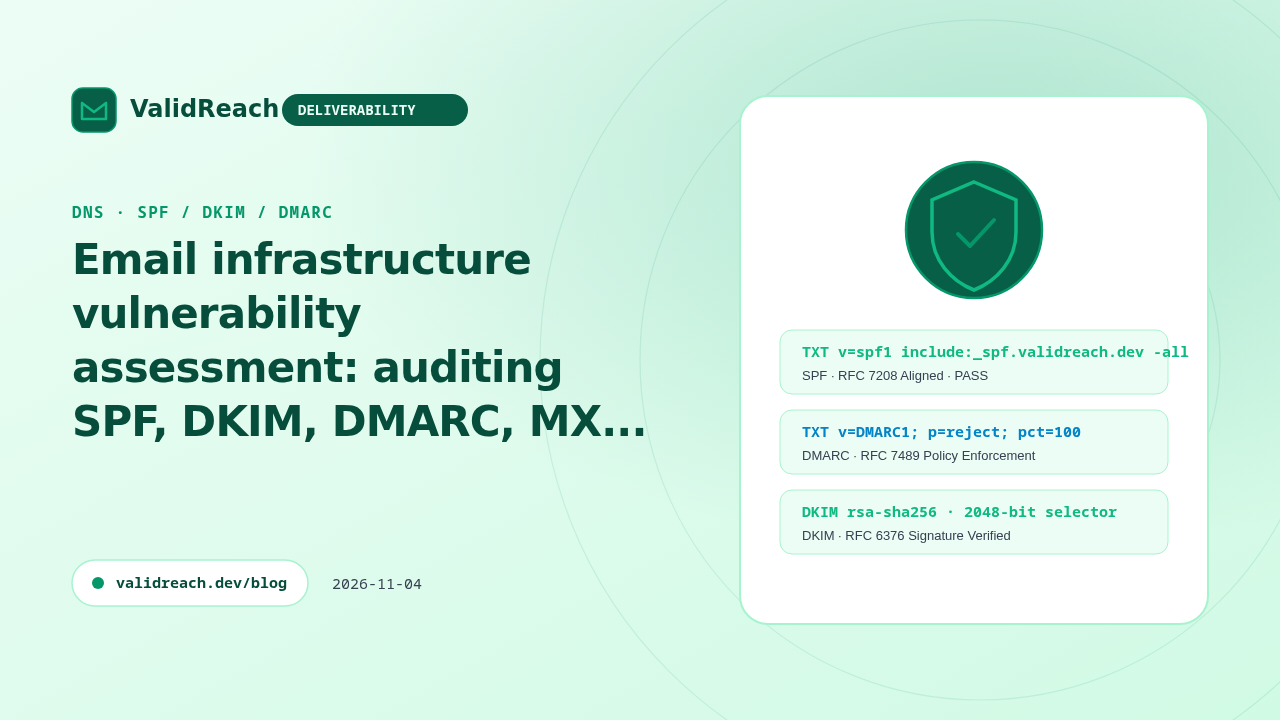
- SPF (RFC 7208): verify that active domains end with
-allor~all(never+all), stay under the 10-lookup ceiling, and remove legacyinclude:mechanisms for decommissioned third-party ESPs that could be hijacked (subdomain/ESP takeover). Check your record with the SPF Record Checker. - DKIM (RFC 6376): confirm that active selectors publish 2048-bit RSA keys and rotate old keys periodically. Inspect selectors with the DKIM Record Checker.
- DMARC (RFC 7489): ensure parked domains publish
v=DMARC1; p=reject;andv=spf1 -allso attackers cannot spoof non-sending domains. Check policy status with the DMARC Record Checker.
2. Signup and transactional endpoint audit
- Registration abuse and enumeration: protect signup and password-reset endpoints against automated enumeration and bot floods.
- Disposable and invalid email blocking: call the ValidReach Email Verification API at registration to reject disposable domains (
disposable_domain) and invalid MX domains (no_mx) before your MTA sends welcome or verification mail (preventing email-bombing abuse against third-party inboxes).
Sources
- NIST SP 800-177 Rev. 1 — Trustworthy Email — accessed 2026-11-04
- IETF RFC 7208 (SPF), RFC 6376 (DKIM), RFC 7489 (DMARC) — accessed 2026-11-04
- ValidReach Free Email & DNS Security Tools — accessed 2026-11-04