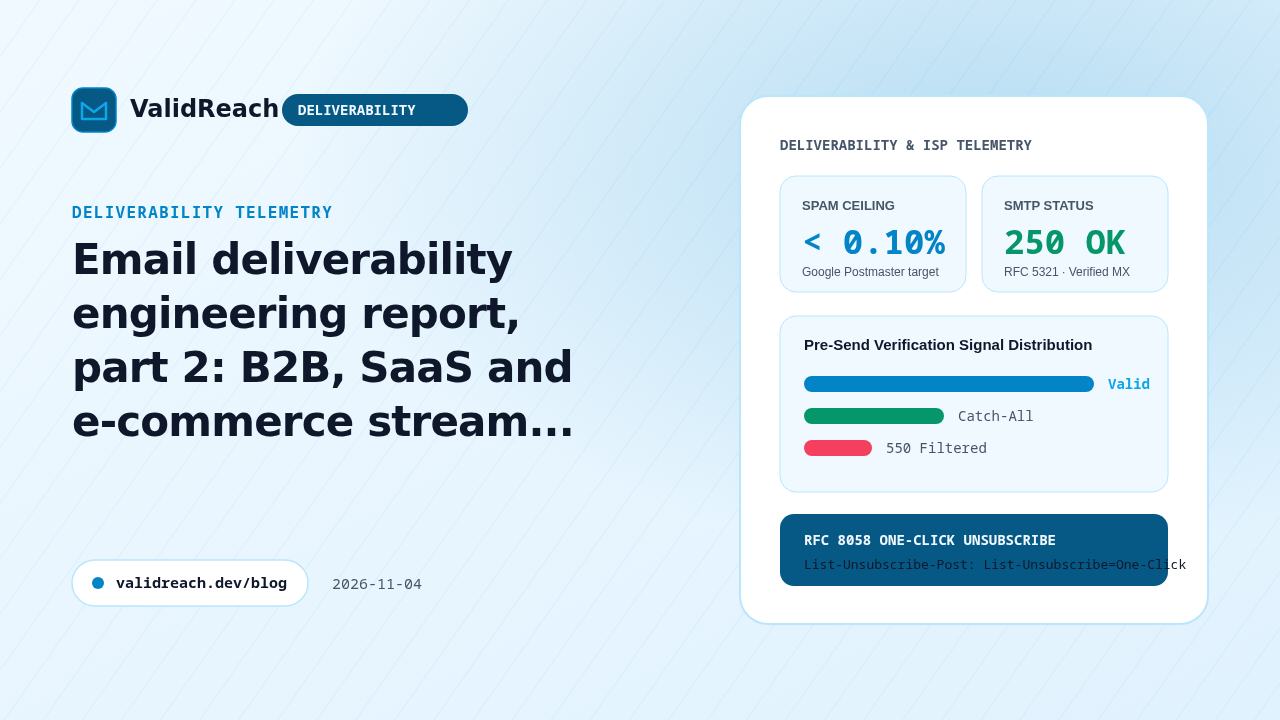
Mail streams behave differently depending on who receives the mail and how the address was collected. Part 2 of our deliverability engineering series examines the structural differences between B2B corporate gateways, SaaS product mail and e-commerce promotions—without relying on unverifiable industry-wide percentage tables.
B2B corporate domains and Secure Email Gateways (SEGs)
B2B lists contain a high share of custom domains protected by enterprise gateways (Proofpoint, Mimecast, Microsoft Defender for Office 365) and catch-all configurations:
- Address churn from job changes: corporate mailboxes are deactivated when employees change roles, turning previously active contacts into
550 5.1.1hard bounces. Re-verify B2B segments that have not been mailed within 60 to 90 days. - Catch-all ambiguity: many enterprise domains accept every
RCPT TOcommand at the edge to prevent directory harvesting. Treatcatchallverification statuses as cautious segments with strict bounce monitoring.
SaaS signup and transactional streams
Free-tier SaaS registration forms attract typo addresses (gmial.com), disposable inboxes used for trial abuse, and automated bot signups:
- Check addresses synchronously at signup using the real-time verification API with a 2-to-3-second client timeout.
- Keep password resets, security alerts and receipts on a dedicated subdomain and IP pool isolated from marketing sequences.
E-commerce and consumer promotional streams
Consumer lists are dominated by major webmail providers (Gmail, Yahoo, Outlook.com, iCloud), where spam-complaint rates (<0.1% target, 0.3% enforcement ceiling) and RFC 8058 one-click unsubscribe compliance govern folder placement.
Sources
- Google Workspace Admin Help — Email sender guidelines — accessed 2026-11-04
- Yahoo Sender Hub — Sender Best Practices — accessed 2026-11-04
- IETF RFC 8058 — Signaling One-Click Functionality for List Email Headers — accessed 2026-11-04
- ValidReach Email Verification API Documentation — accessed 2026-11-04