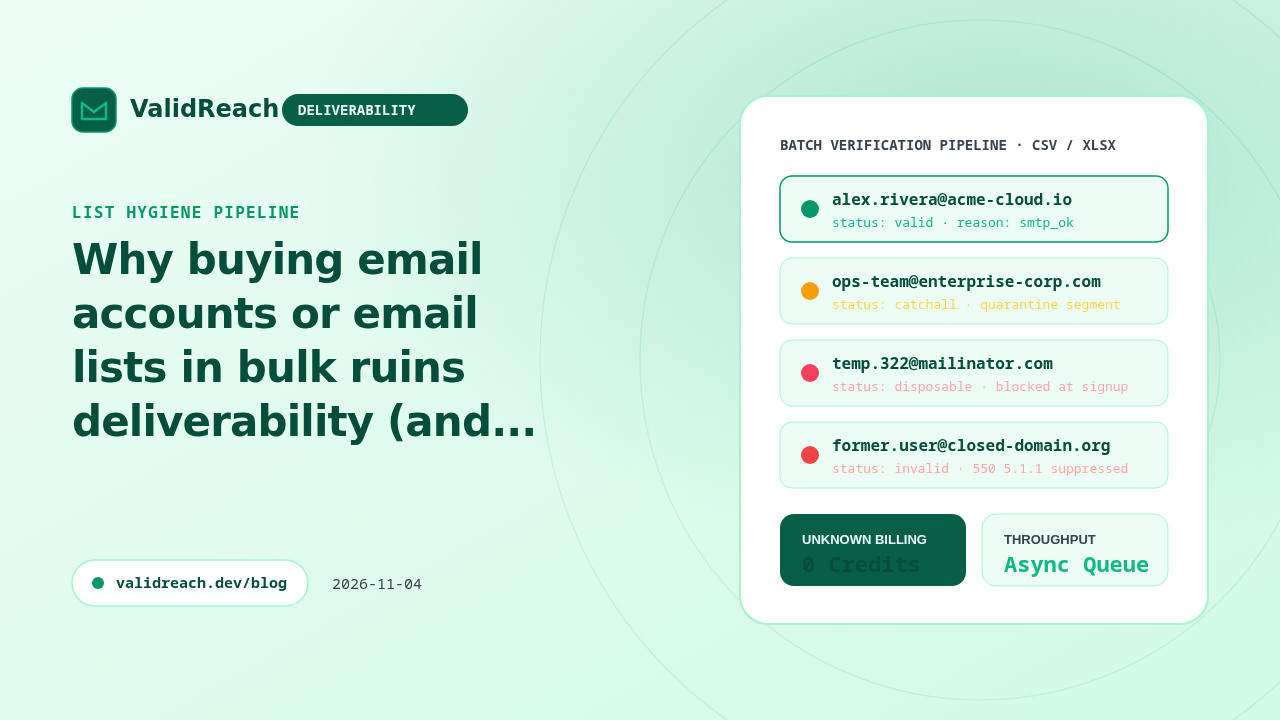
Teams looking to scale outbound campaigns are sometimes tempted to buy bulk email accounts (pre-created webmail or workspace inboxes) or purchased contact lists. Both practices violate mailbox provider terms of service and reliably destroy sender reputation.
1. Why bulk-purchased email accounts get suspended immediately
Mailbox providers such as Google Workspace and Microsoft 365 detect bulk-registered or resold accounts through automated abuse signals:
- Accounts created via automated farms share creation fingerprints, recovery numbers and IP ranges; when one account on the batch sends spam, the entire cluster is disabled.
- Sending outbound mail from consumer webmail accounts bypasses custom-domain SPF, DKIM and DMARC alignment and violates Google's Email Sender Guidelines.
2. Why purchased contact lists trigger blacklists and spam traps
Purchased email lists contain high concentrations of deactivated corporate mailboxes (hard bounces), recycled spam traps and people who never consented to hear from you:
- High hard-bounce rates and spam complaints (
>0.3%) cause Gmail, Yahoo and Outlook to block your domain and land your sending IPs on DNSBLs (which you can check with our Email Blacklist Checker). - Under GDPR and CASL, bought lists do not provide valid consent.
3. Compliant, sustainable alternatives
- Provision official mailboxes on your own secondary domains with proper SPF, DKIM, DMARC and
PTRrecords. - Build opt-in lists and verify every existing contact with ValidReach before sending a single campaign.
Sources
- Google Workspace Admin Help — Email sender guidelines — accessed 2026-11-04
- Regulation (EU) 2016/679 (General Data Protection Regulation) — accessed 2026-11-04
- ValidReach Email Blacklist Checker — accessed 2026-11-04