Mailbox providers do not publish secret scoring formulas, nor can any external tool promise inbox placement. However, Google, Yahoo and Microsoft publish explicit technical requirements that every bulk or transactional sender must pass. Part 4 of our deliverability engineering series consolidates those requirements into an actionable verification checklist.
Mandatory authentication and DNS alignment
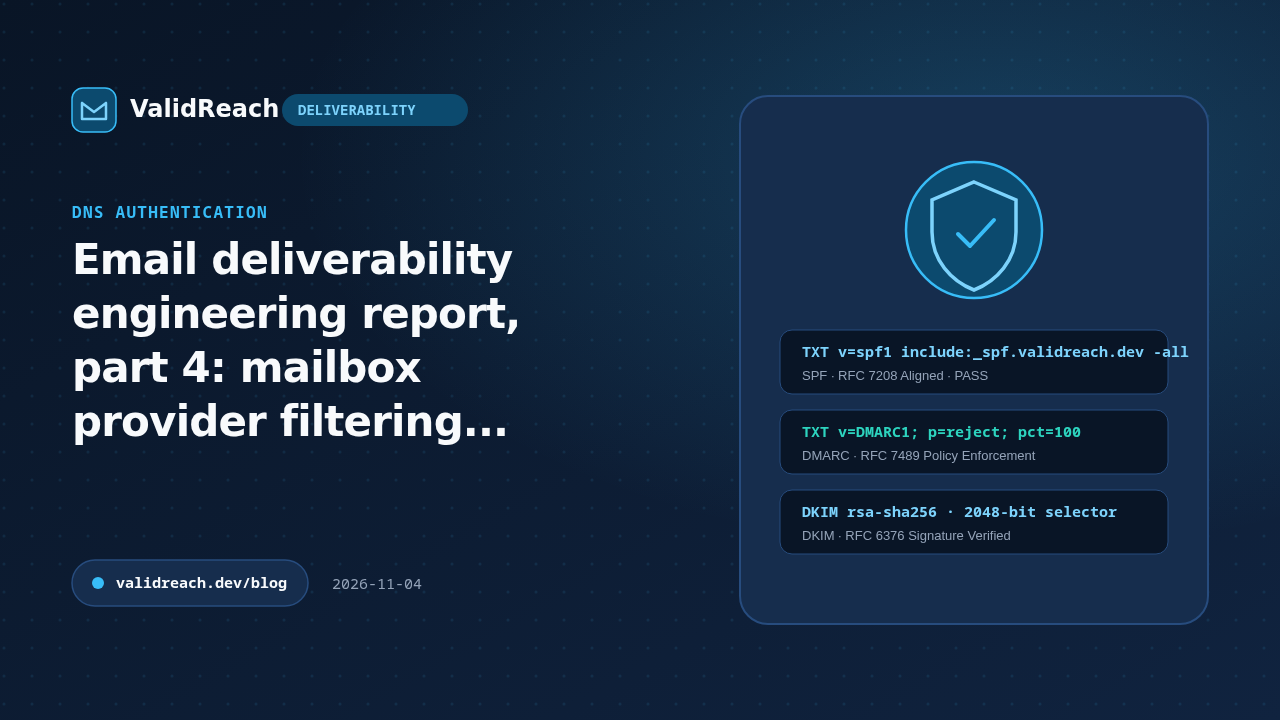
Both Google and Yahoo require bulk senders to publish and pass:
- SPF (RFC 7208): authorize every outbound IP and third-party ESP sending on behalf of your envelope domain, staying within the 10-DNS-lookup limit.
- DKIM (RFC 6376): sign messages with at least a 1024-bit RSA key (2048-bit recommended).
- DMARC (RFC 7489): publish at least
v=DMARC1; p=none;with identifier alignment between the visibleFrom:domain and either the SPF domain or the DKIMd=domain. - Forward and reverse DNS (
PTR): every sending IP must have aPTRrecord that resolves to a hostname pointing back to the same IP.
Spam complaint and bounce ceilings
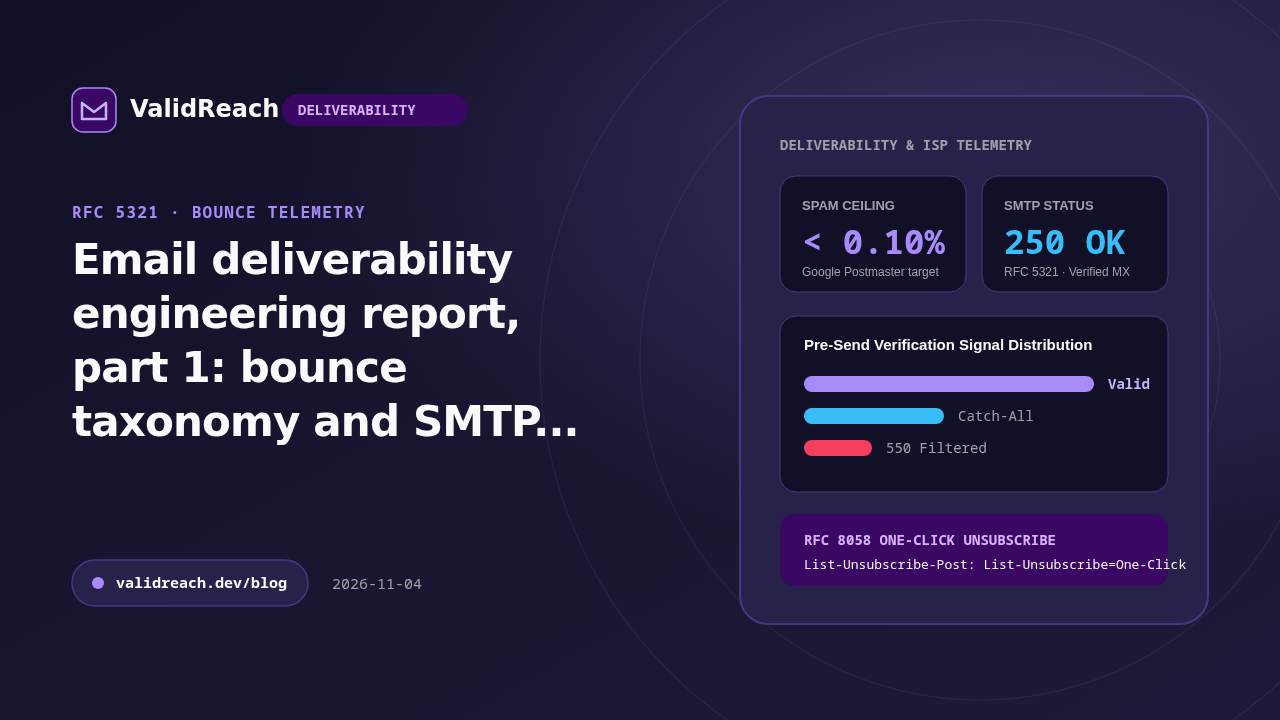
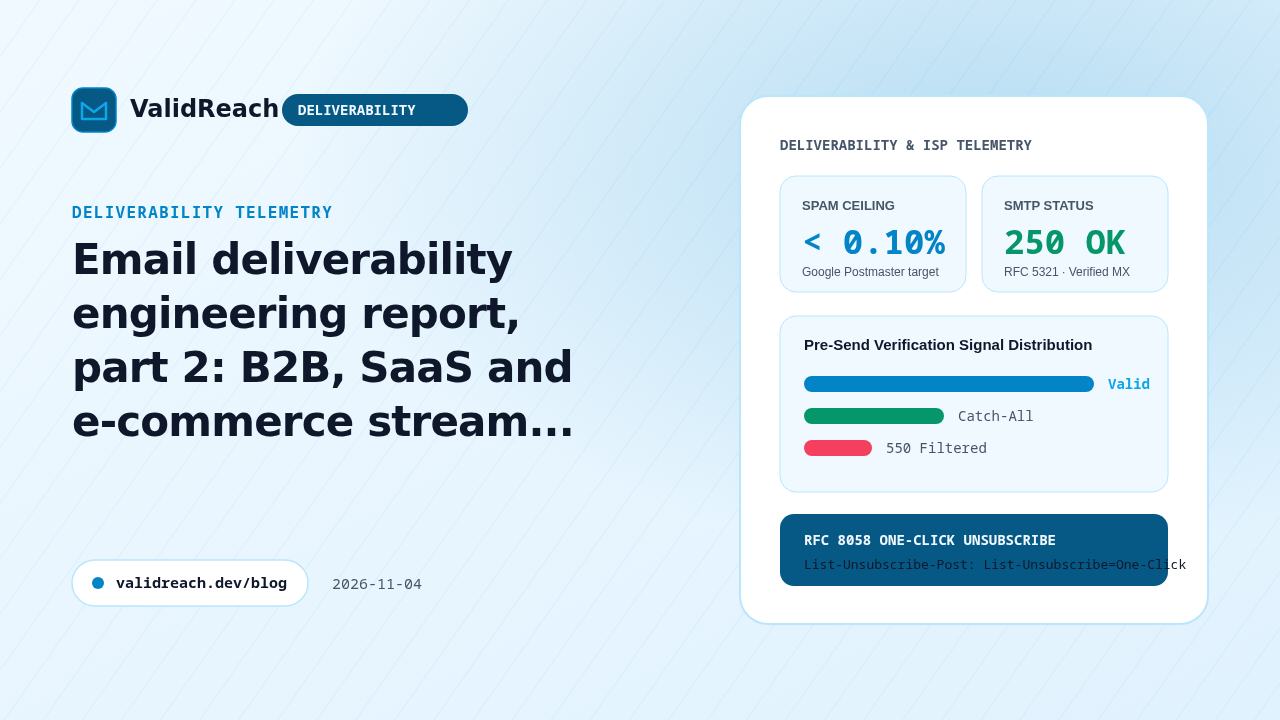
- Spam rate: keep user-reported spam rates in Google Postmaster Tools below
0.1%, and never reach0.3%. - One-click unsubscribe (RFC 8058): include
List-Unsubscribe-Post: List-Unsubscribe=One-ClickandList-UnsubscribeHTTPS headers on all marketing and subscribed messages, and process unsubscribes within two days. - Bounce prevention: verify new signups and imported lists with ValidReach so invalid recipients (
550 5.1.1) and disposable addresses are filtered out before transmission.
Pre-send verification workflow
Use ValidReach's free SPF Checker, DKIM Checker, DMARC Checker and Email Deliverability Test before launching a new sending domain.
Sources
- Google Workspace Admin Help — Email sender guidelines — accessed 2026-11-04
- Yahoo Sender Hub — Sender Best Practices — accessed 2026-11-04
- IETF RFC 7208 (SPF), RFC 6376 (DKIM), RFC 7489 (DMARC), RFC 8058 (One-Click Unsubscribe) — accessed 2026-11-04