Effective email risk management relies on measurable protocol and list-quality signals rather than opaque black-box scores. Tracking a focused set of risk assessment metrics across signup forms, batch imports and outbound MTAs lets your team catch reputation problems before mailbox providers block your domain.
1. Pre-send list risk metrics
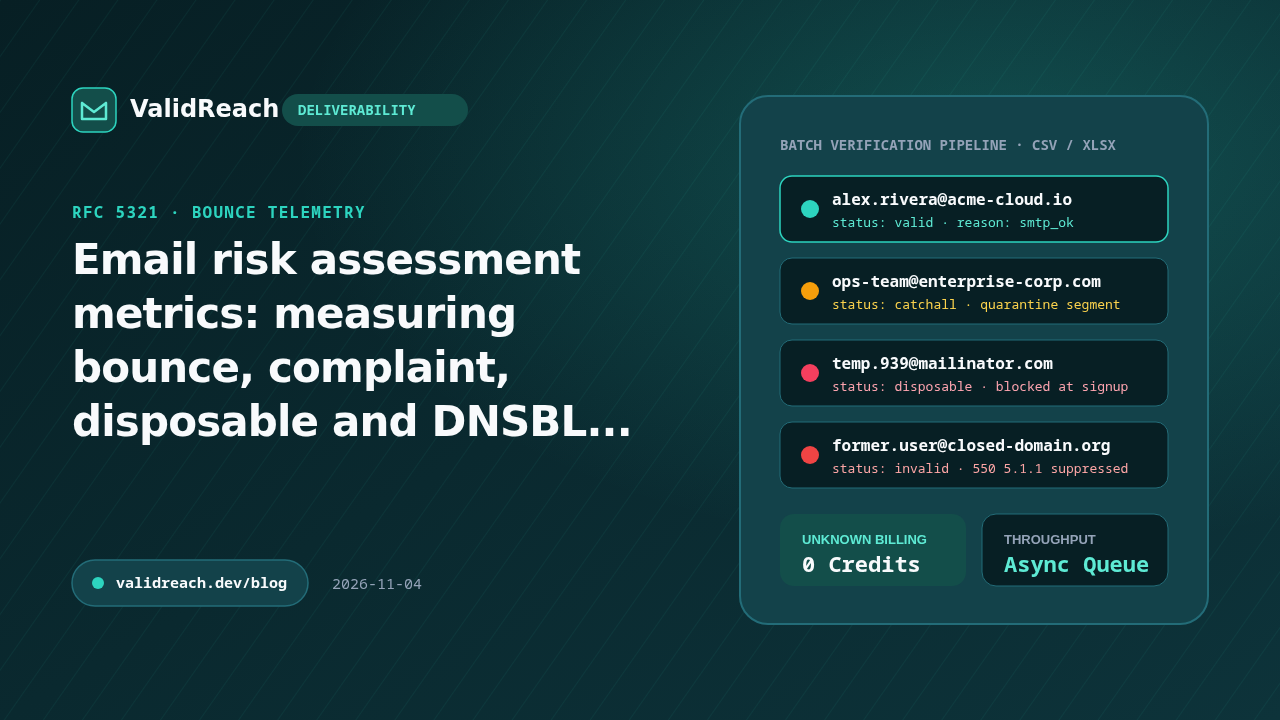
Before launching a campaign or importing a partner list, measure the distribution of ValidReach verification statuses across the batch:
- Invalid and dead-domain share (
invalid/no_mx): measures how stale or unverified the acquisition source is. Any batch with elevated invalid rates should be quarantined and its capture source audited. - Disposable address rate (
disposable): tracks signup fraud, coupon abuse or bot activity on registration forms. - Catch-all and role exposure (
catchall+role): measures the share of addresses where delivery acceptance cannot be confirmed beforehand (catchall) or where messages reach shared group inboxes (role).
2. Post-send MTA and ISP risk metrics
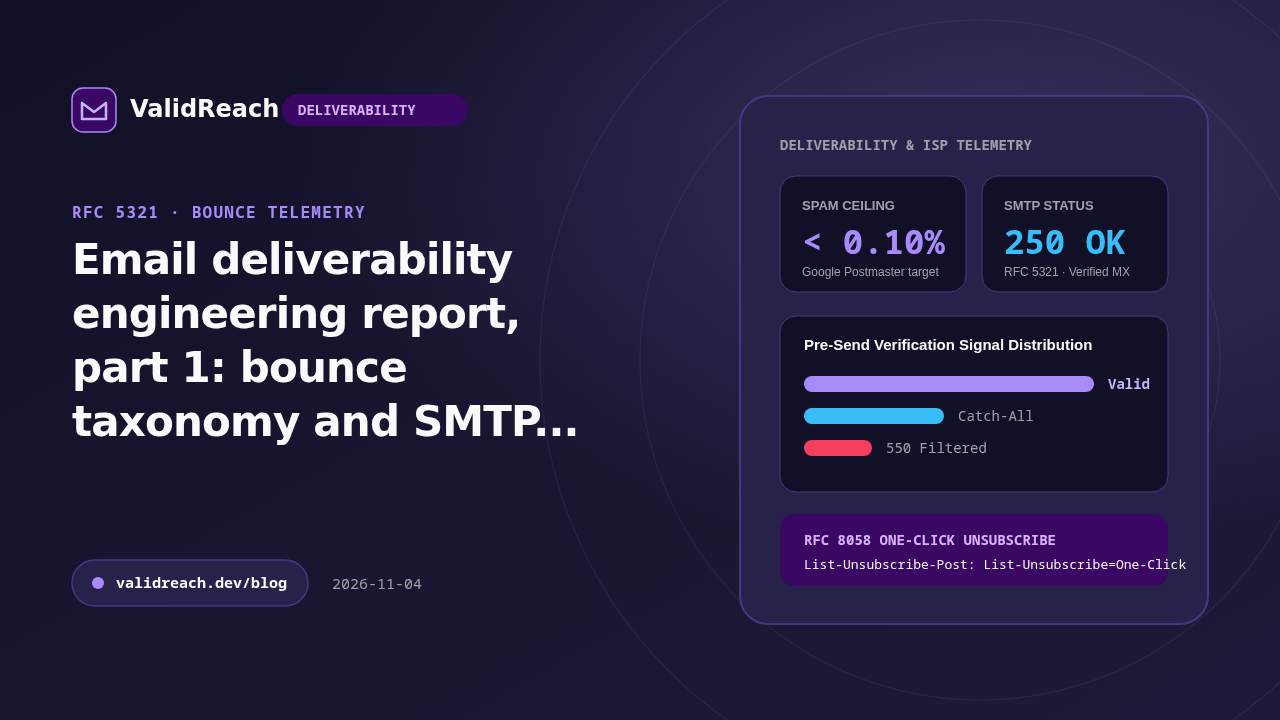
- User-reported spam complaint rate: Google's Email Sender Guidelines specify keeping spam rates below
0.1%and avoiding0.3%or higher. - SMTP hard-bounce rate (RFC 3463
5.X.X): tracks permanent delivery failures (550 5.1.1) that escaped pre-send verification. - DNSBL listing status: monitor sending IPs and domains across public blocklists using the Email Blacklist Checker and IP Reputation Checker.
Sources
- Google Workspace Admin Help — Email sender guidelines — accessed 2026-11-04
- IETF RFC 3463 — Enhanced Mail System Status Codes — accessed 2026-11-04
- ValidReach Verification Results Reference — accessed 2026-11-04