Public cold-email benchmark reports compiled from a single sending platform's users mix vastly different list sources, offer types and domain setups—and their open-rate figures are heavily distorted by Apple Mail Privacy Protection and enterprise link scanners. Instead of chasing another sender's averages, manage your outbound infrastructure against explicit protocol and ISP guardrails.
1. Non-negotiable ISP and SMTP guardrails
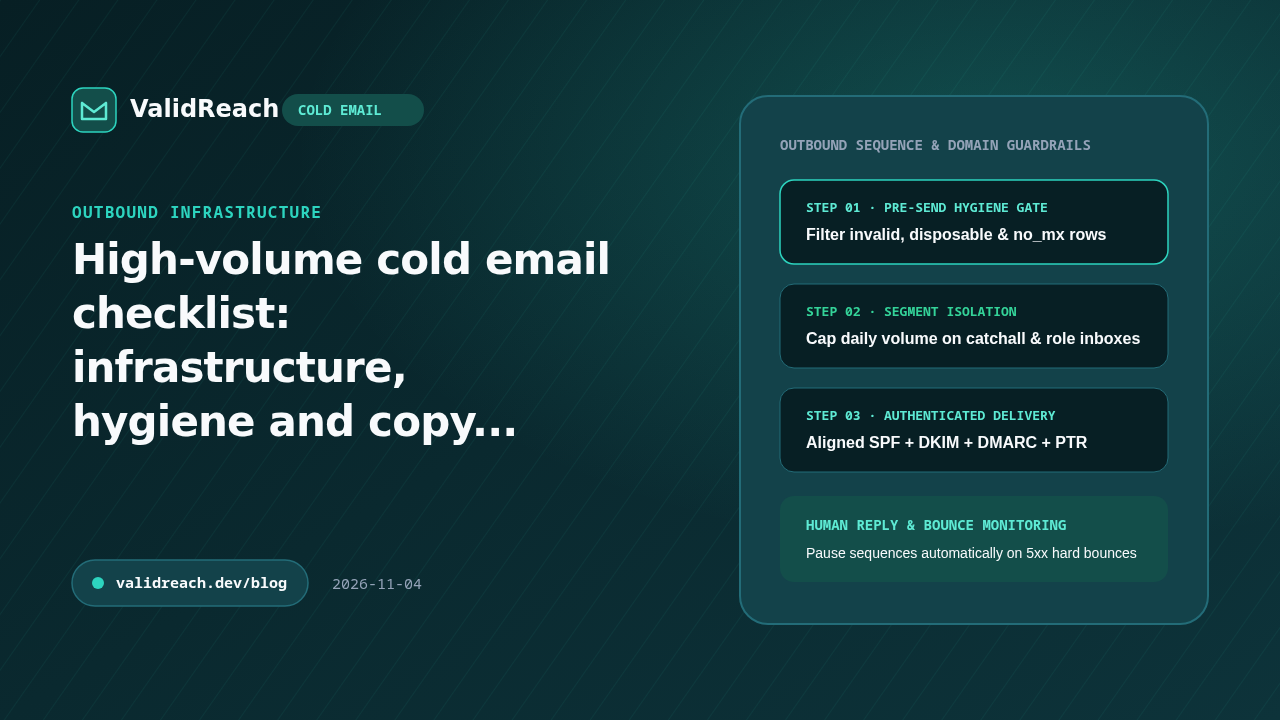
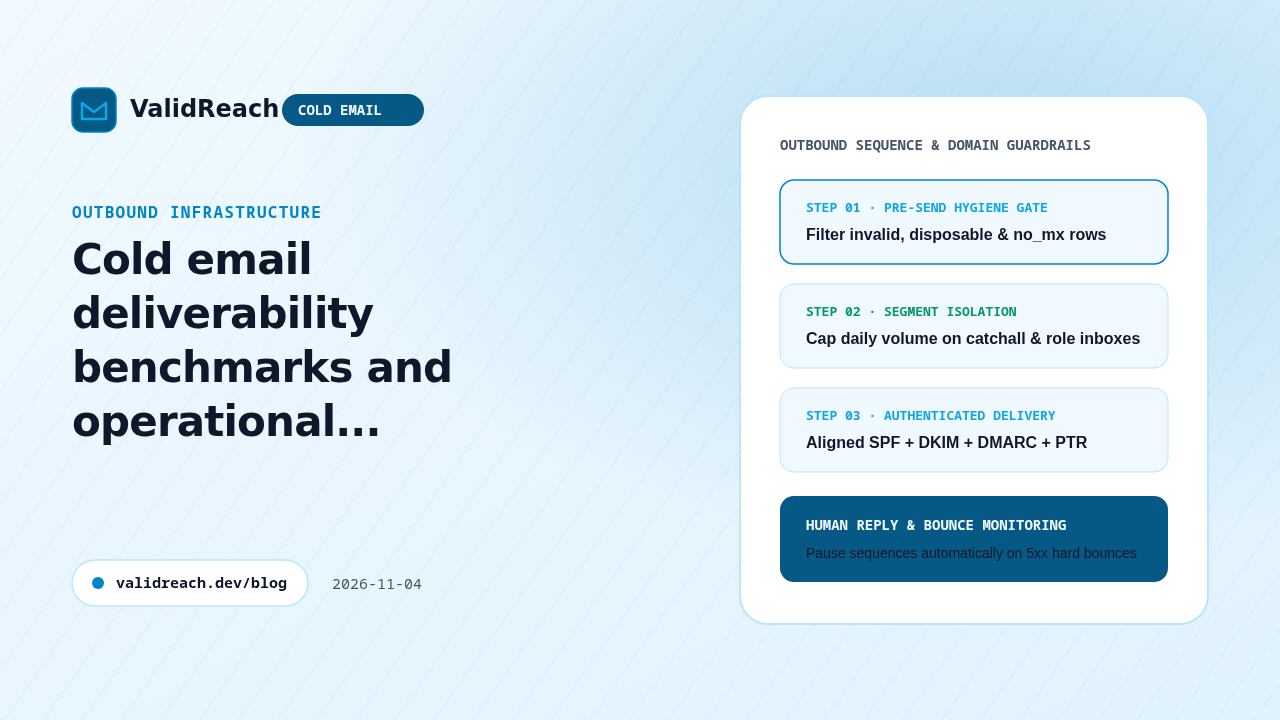
Mailbox providers enforce hard thresholds rather than industry averages:
- Spam complaint ceiling: Google's Email Sender Guidelines require keeping user-reported spam rates below
0.1%and never reaching0.3%. - Hard bounce ceiling: keep hard bounces as close to zero as possible by running every prospect batch through email verification immediately before scheduling a sequence.
- Authentication: publish valid SPF, DKIM and DMARC records on every outbound domain, and ensure reverse DNS (
PTR) matches your sending IP.
2. Handling catch-all and pattern-guessed B2B addresses
Cold email lists built with pattern finders contain a high proportion of guessed addresses and catch-all corporate domains:
- Never send to
invalidordisposablestatuses. - Isolate
catchalladdresses into a dedicated sequence with conservative daily volume caps; pause immediately if SMTP550bounces appear. - Sync ValidReach verification results directly into your outbound sequencer via our Instantly integration, Smartlead integration or n8n workflows.
3. Measure outcomes that cannot be faked by bots
Track delivery acceptance (250 OK), bounce codes (4xx vs. 5xx per RFC 3463), positive human replies and booked meetings rather than pixel opens.
Sources
- Google Workspace Admin Help — Email sender guidelines — accessed 2026-11-04
- IETF RFC 3463 — Enhanced Mail System Status Codes — accessed 2026-11-04
- ValidReach Instantly Integration Guide — accessed 2026-11-04