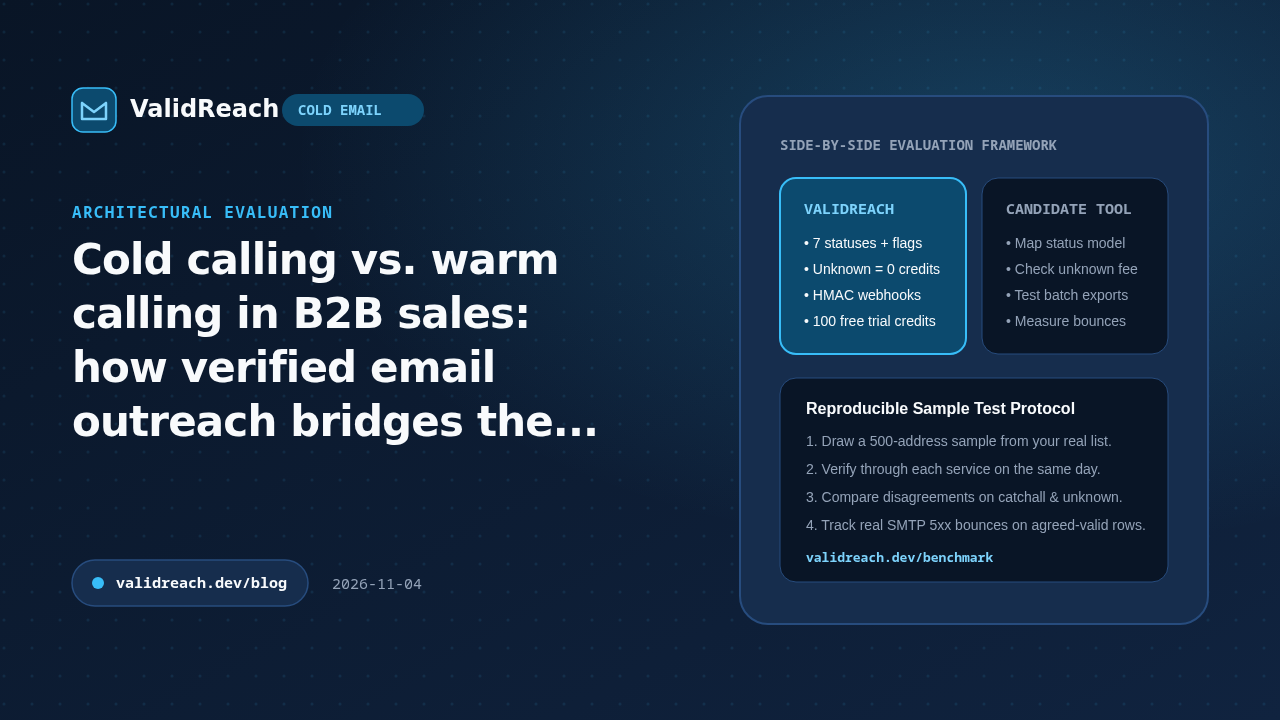
In B2B outbound sales, the difference between a cold call and a warm call comes down to context and prior touchpoints. Calling a prospect who has never heard of your company has high friction; calling someone who has already received a relevant, well-timed email or visited your documentation changes the conversation entirely.
Key differences between cold and warm outreach
| Dimension | Cold outreach | Warm outreach |
|---|---|---|
| Prior context | No prior interaction with your brand | Prospect opted in, replied to an email, attended a webinar or was referred |
| Data quality risk | High risk of stale titles and deactivated emails | Lower risk if verified at capture, though B2B job churn still degrades lists |
| Channel coordination | Relies on interrupting the prospect | Combines multi-channel context (verified email + scheduled call) |
Why email verification is the foundation of multichannel outreach
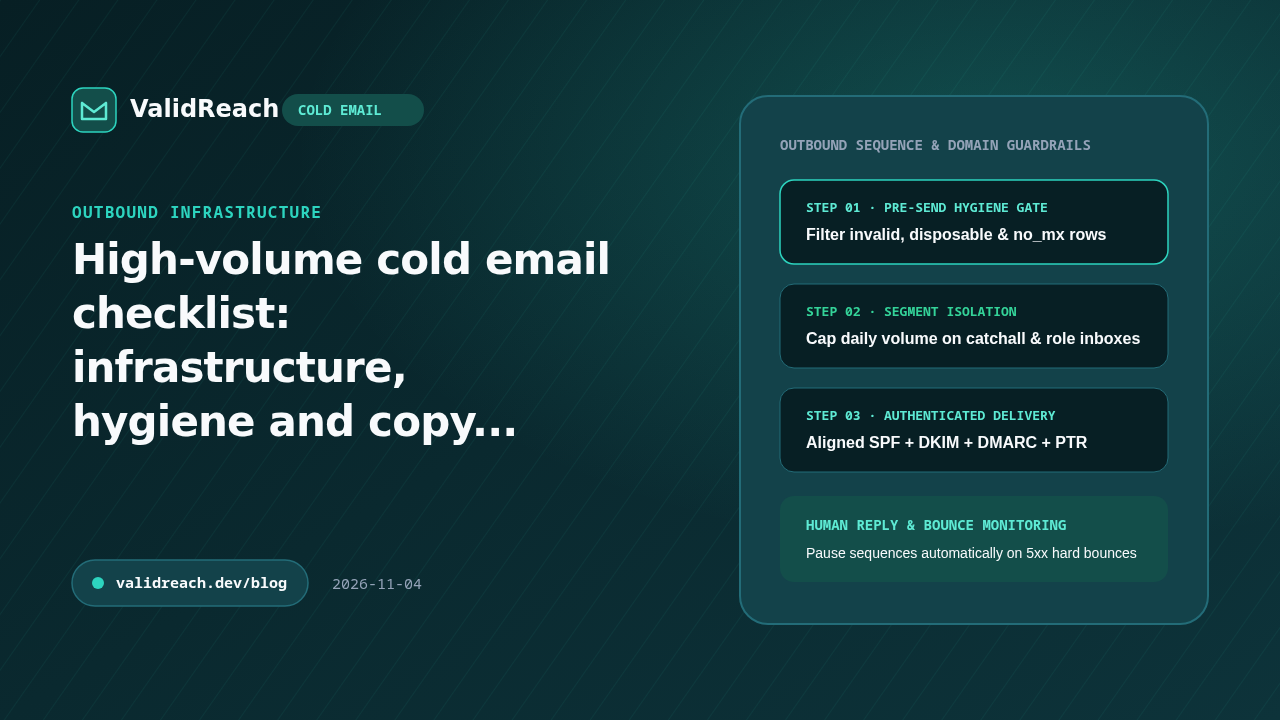
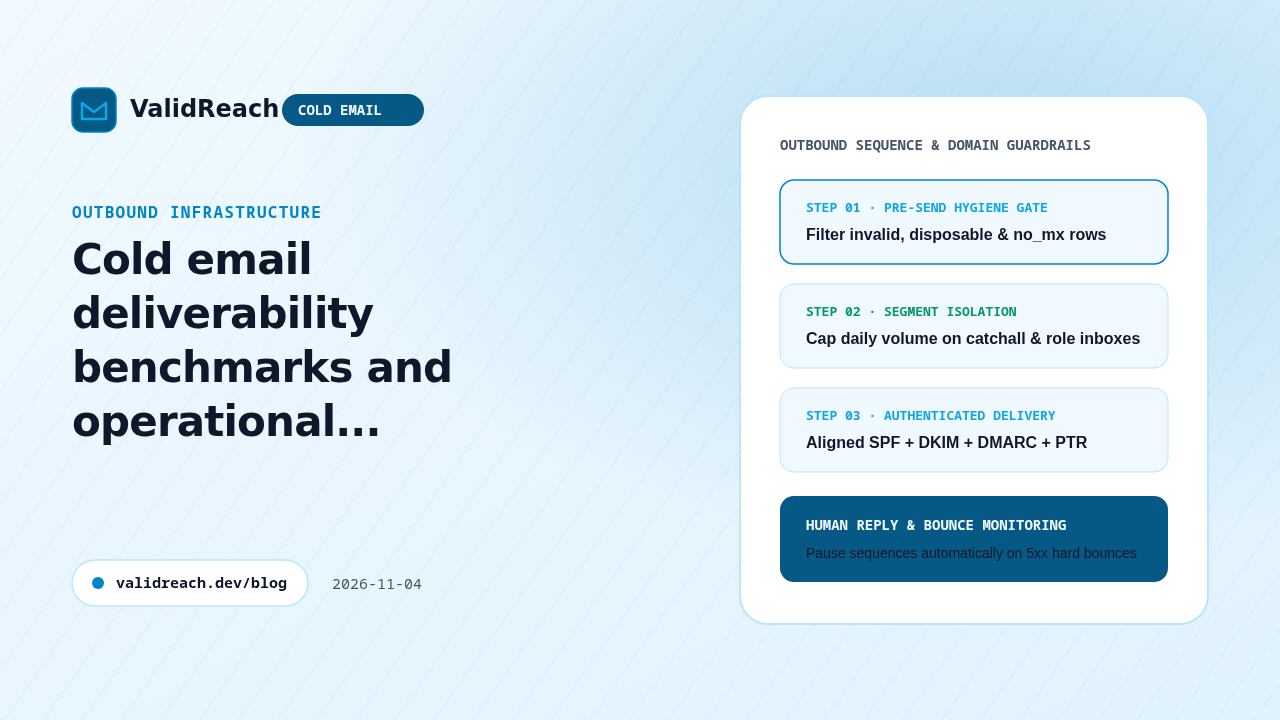
If your SDR team pairs outbound email sequences with phone follow-ups, an unverified prospect list undermines both channels:
- Bounced emails mean wasted dials: an SMTP
550 5.1.1hard bounce on a corporate email address is often the earliest signal that the prospect has left the company. Verifying the list with ValidReach before loading your sequencer saves SDRs from calling people who no longer work at the target account. - Protect outbound domain reputation: keeping hard bounces near zero and spam complaints below
0.1%ensures your pre-call intro emails actually reach the prospect's inbox. - Validate phone syntax alongside email: run phone columns through the Phone Number Validator and email columns through ValidReach before syncing to HubSpot, Salesforce or Pipedrive.
Sources
- Google Workspace Admin Help — Email sender guidelines — accessed 2026-11-04
- ValidReach CRM & Sales Integrations — accessed 2026-11-04